
Guide · For studios
How to Charge Members for Kiln Firing (Fairly, and Without Losing Revenue)
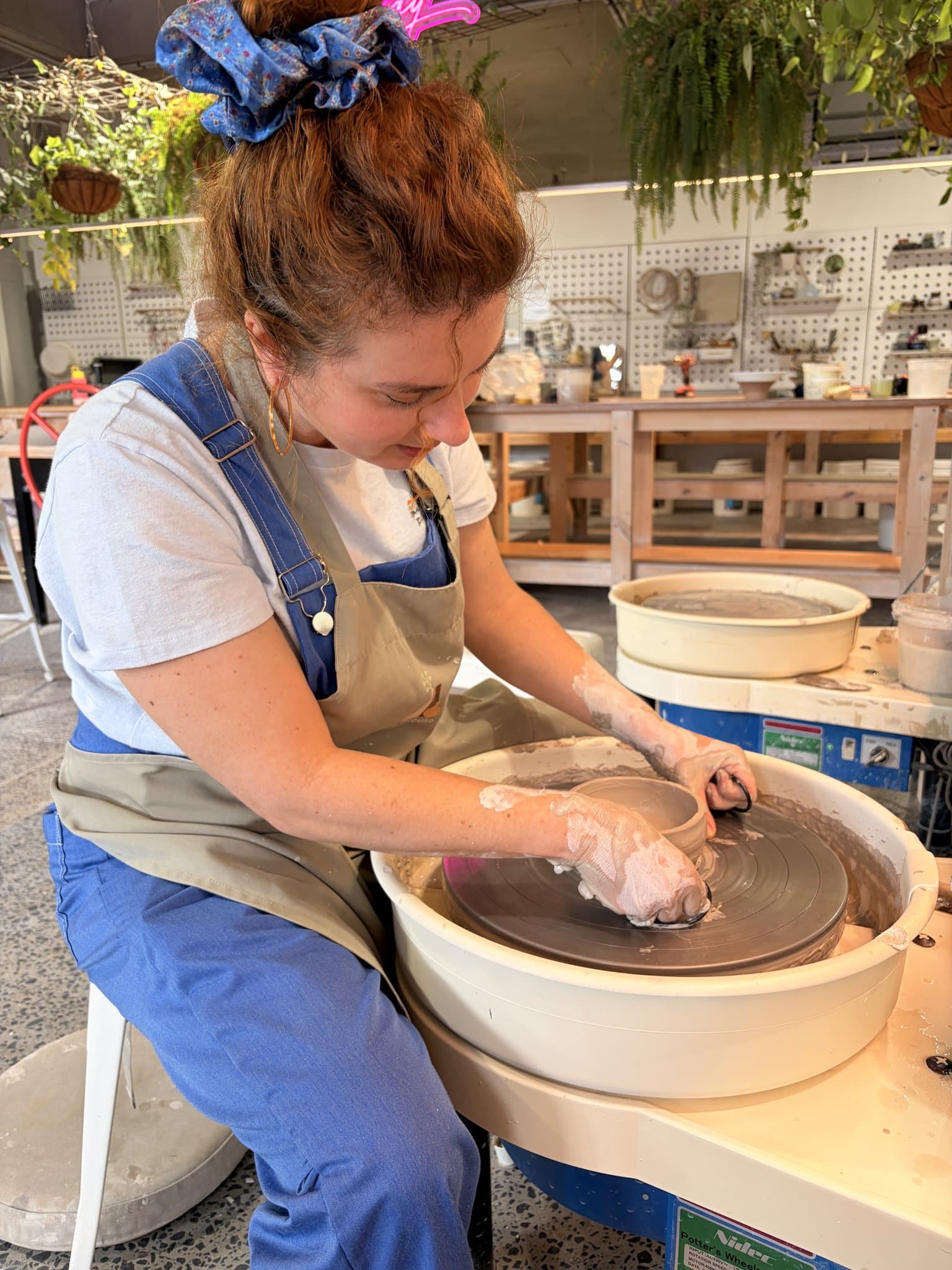
Firing fees are one of those things every studio does slightly differently, and almost everyone finds a bit annoying. A member finishes up with three bowls and a tall vase and asks what they owe. Someone weighs them, does the sums in their head, rounds to something that feels fair, and either takes the payment or writes it on a tab to sort out later. Do that a few dozen times a week and you've got a lot of little money conversations, an honesty jar that never balances, and a nagging feeling the kilns cost more to run than what's coming back in.
The pricing model itself is rarely the hard part. It's the weighing, charging and chasing, and making it feel fair to members while still covering your costs. Here's how studios usually charge, and how to make whichever way you charge fair, hands-off and actually captured.
How studios usually charge
There's no one right way, and most studios land on whatever suits their crowd. The most common is by weight: you pop the piece on the scales and charge per kilo. It's simple, easy to explain, and tracks pretty well with what a firing actually costs, since a heavier load usually means more clay and more kiln. Some studios fold firing into a membership so people fire freely within reason. Others do a flat fee, or price by size. And plenty run different rates for different folks, one for members, another for casual drop-ins, something lower for students, free or discounted for staff. All of it works. The model is rarely where it goes wrong.
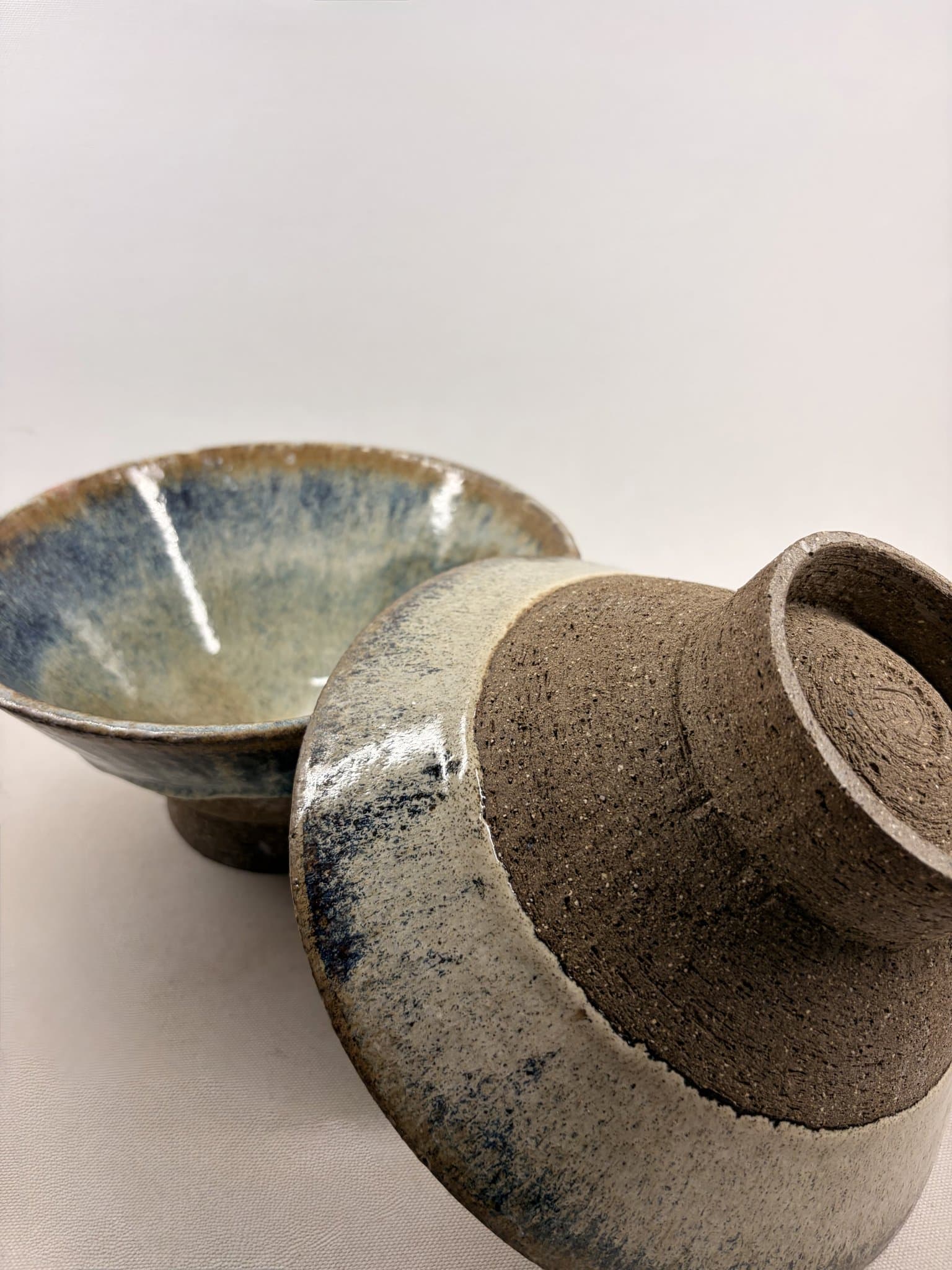
Where it actually goes wrong is the doing of it
The mess is in the day-to-day. Someone has to weigh each piece and work out the charge, and by hand that means rounding, because nobody's billing to the gram with a calculator. Someone has to collect the money, which is your staff having small awkward money chats with the people they're meant to be teaching. Tabs get written and forgotten. The honesty jar runs on everyone remembering and being straight about what they fired. And every now and then a pot's a fair bit heavier than what got declared. None of that's a pricing problem, it's an admin and honesty problem, and it's where the fairness and the revenue both slip.
Fair down to the gram
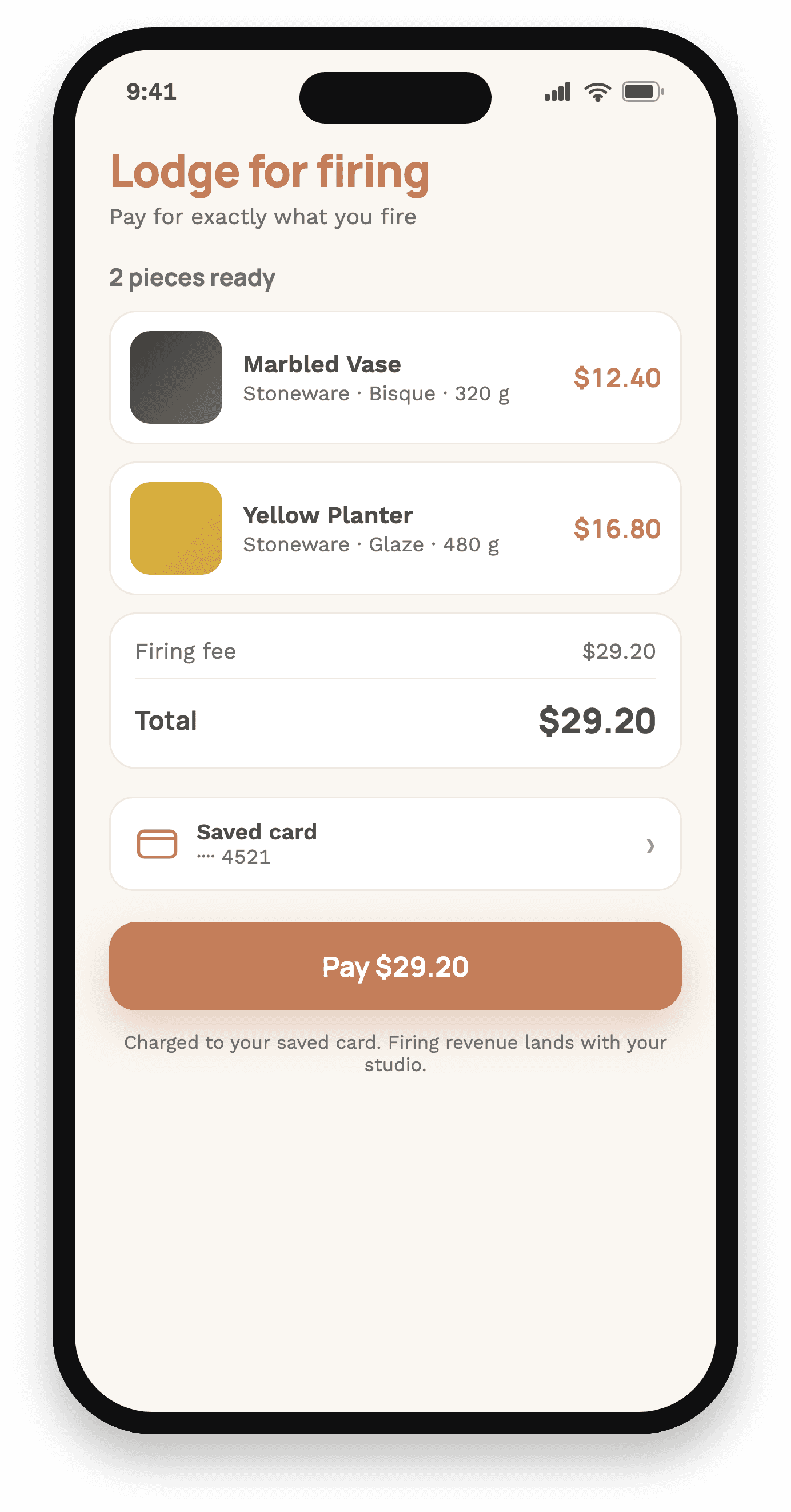
The first thing to fix is the rounding. In MudBuddy the firing is priced on the exact weight of the piece, no rounding up or down, and the right rate gets applied automatically depending on whether the potter's a member, a non-member, a student or staff. That's fairer both ways at once. The potter's not overpaying because someone rounded up, and you're not wearing the difference when someone rounded down. Everyone pays what the piece actually is, at the rate that applies to them.
No staff stuck holding the till
The next one is getting your team out of the transaction. Instead of someone working out a charge and collecting it, MudBuddy charges the potter's card automatically and sends them an invoice, tax and all. No awkward chats, no honesty jar to reconcile, no chasing a tab. Your staff go back to being teachers and technicians instead of moonlighting as the cashier, and the money still turns up.
It keeps everyone honest
This is the bit studios tend to like most. Because the firing's logged and paid when the potter enters their piece, you see the weight they recorded at the moment you scan the piece to load the kiln. If something on the shelf is clearly heavier than what was logged and paid for, it's easy to spot. Nobody has to police the honesty jar, the system just keeps everyone straight. And since every piece is logged and charged as it goes in, the firings that used to fall off the whiteboard are all accounted for.
Be straight about it
However you price it, keep it out in the open. Let members see exactly what they were charged and why, down to the weight of each piece, and firing stops feeling like a mystery tax and starts feeling like what it is. Studios that are upfront about their firing costs earn the kind of trust that keeps people firing with them for years.
See how it'd work in your studio
Whether you charge by weight, roll firing into memberships, or run different rates for different potters, it's worth seeing how MudBuddy handles the weighing, charging and honesty side for you. We'll walk you through it with your own rates in mind.
Book a MudBuddy demoOr read more about MudBuddy for studios.
Frequently asked questions
How do most pottery studios charge for kiln firing?
The most common method is by weight: the piece is weighed and charged per kilo. Some studios include firing in a membership, others charge a flat fee or by size, and many run different rates for members, non-members, students and staff. There's no single right model, and the best one is usually whatever your members find fair and you find sustainable.
Is charging firing by weight accurate?
Weight is a good, fair basis, because it tracks reasonably with clay used and kiln space taken. The usual weak point is rounding: weighing by hand, most studios round to a tidy number, which slightly overcharges some potters and undercharges others. Pricing on the exact weight removes that, so each firing is charged for precisely what it is.
How can a studio take staff out of collecting firing payments?
Use a system that charges the potter automatically. In MudBuddy the potter's card is charged for their firing and an invoice is issued with tax handled, so no staff member has to weigh up a charge, collect cash, or chase a tab. It removes both the workload and the awkwardness of asking members for money.
How do you stop potters under-declaring what they fire?
Tie the charge to the piece and make the recorded weight visible to the studio at kiln-loading. When staff scan a piece to load it and can see the weight that was logged and paid, a piece that's heavier than declared is easy to notice, so the system keeps everyone honest without anyone having to watch the shelves.