
Guide · For studios
Where Pottery Studios Lose Money (And How to Stop It)

Running a pottery studio is a strange kind of business. You can be flat out, kilns full, every class booked, and still find that what's left at the end of the month doesn't match how hard everyone worked. Usually it isn't one big problem you can point at. It's a lot of small leaks, most of which are easy to miss because they happen while you're busy doing three other things at once. Here's where the money tends to go, and what to do about each one.
Firing that never gets counted
This is the big one, and it's worth being honest about. In a busy studio, plenty of firing simply never gets charged. A piece goes in the kiln in the middle of a rush and nobody writes it down. The honesty jar comes up light most weeks. Someone fires a full glaze load and pays for what they can remember, which is never quite everything. And when you're weighing and pricing by hand you round down, because you're not going to argue with a member over forty cents, so even the firings you do catch come in a little under.
Most of that isn't people being dodgy. It's just what happens when the money is kept separate from the pot. Once the firing is tied to the actual piece and recorded the moment it goes in the queue, most of it stops leaking, and a lot of studios are surprised how much firing they'd been giving away for free.
The supplies you sell
Clay, glazes, tools, the odd bag of plaster. It's real money, and it's often the loosest part of the whole operation. If supplies go out on trust, on a tab, on an "I'll get you next time," some of it never comes back. And if you're not counting stock as it sells, you honestly can't tell what sold from what wandered off. Most studios who start tracking it properly find the two numbers were further apart than they'd have guessed.
Nothing clever needed here. Take the payment when the supplies go out, and count the stock down at the same time. In MudBuddy that happens together: members buy their clay and glazes in the app and the inventory ticks down per item, so what you've sold and what's on the shelf actually agree.
The hours your team spends not teaching
Your staff are probably your biggest cost, and a fair slice of their time goes on things that aren't teaching or firing. Answering "is my piece ready," hunting through shelves, tallying firing charges, taking little payments, writing names on masking tape, counting the honesty jar. None of it feels like much in the moment. Add it up across every shift and you're paying good wages for admin.
The trick isn't to make your team quicker at the admin, it's to hand most of it back to the members. When people log and track their own pieces, pay automatically, and get told when their work's ready, your staff go back to the things members actually turn up for.
The bank's cut on every little payment
This one hides because it's death by a thousand cuts. Every time a member taps their card for a five dollar firing, your bank takes a fixed slice, and on small amounts that slice hurts. Do it a few hundred times a month and you've handed over real money in fees just for the privilege of being paid.
Letting members top up credit and draw their firing and supply charges from it takes care of most of that, because a month of little payments becomes one, and the bank only takes its cut the once.
Not actually knowing your numbers
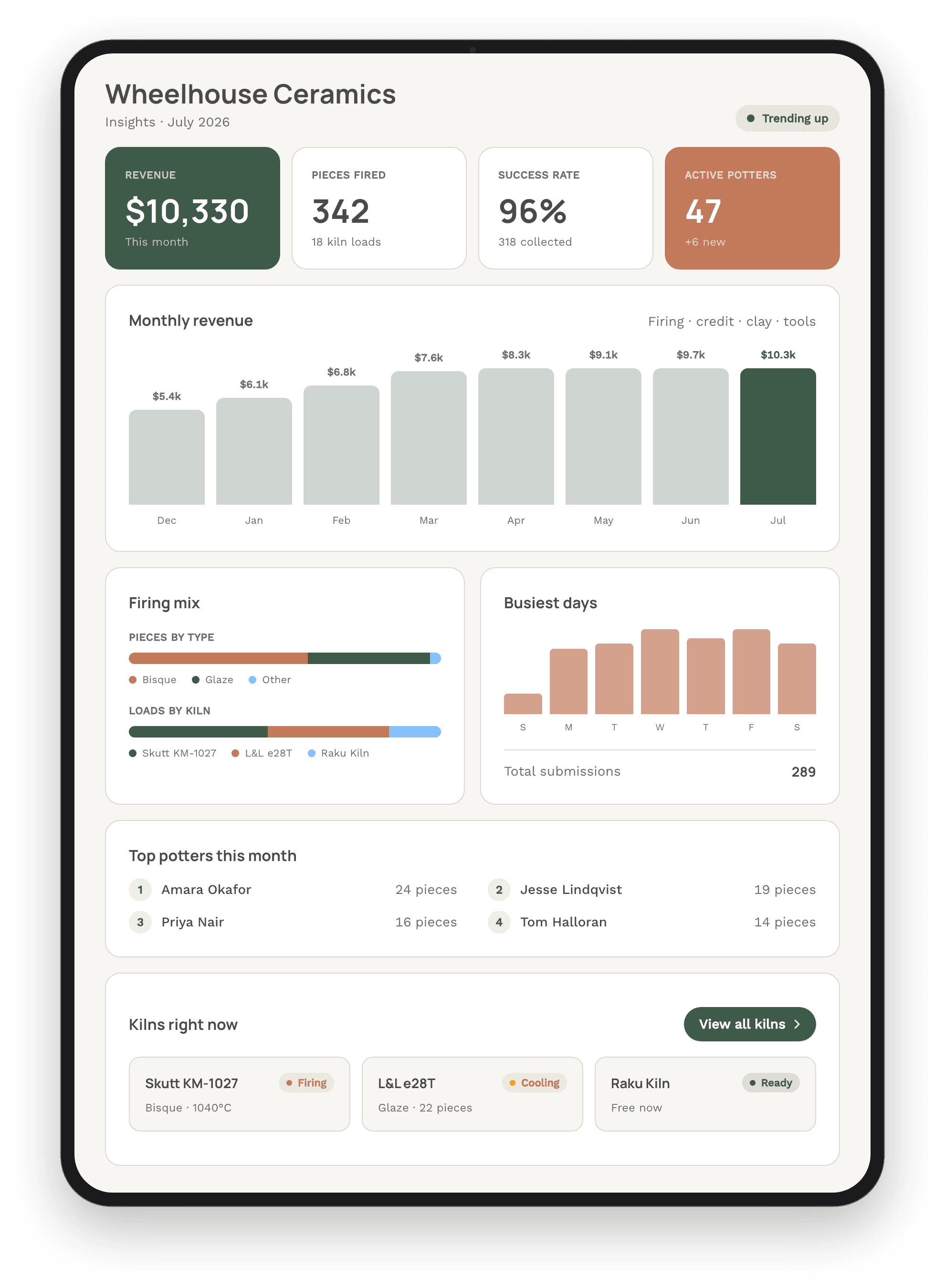
The most expensive leak is the one you can't see at all. If you don't know your real firing turnaround, which kiln loads make money and which don't, which classes fill, or which glazes sell, then you're pricing and planning on a hunch. Plenty of studios undercharge for years, not because they're careless, but because nobody ever put the numbers in front of them. Being able to see the return on a kiln load, or which clay bodies members actually buy, is what turns a guess into a decision you can stand behind.
Stopping the leaks
None of these is dramatic on its own, which is exactly why they go unnoticed for years. Put together, they're often the difference between a studio that just gets by and one that pays its people properly and has a bit left to put back in. And the nice part is you don't fix any of it by charging more. You fix it by hanging onto what's already yours.
Worth a look at your own numbers
If a few of these sound like your studio, it's worth seeing where the money is actually going. We'll walk you through it, kilns, rates and all.
Book a MudBuddy demoOr read more about MudBuddy for studios.
Frequently asked questions
Why do so many pottery studios struggle to make money even when they're flat out?
Because busy and profitable aren't the same thing. Most studios don't lose money on one big cost, they lose it in lots of small leaks: firing that never gets charged, supplies that go out on trust, staff time spent on admin, card fees on tiny payments, and no real view of which parts of the studio pay their way. Each one is small enough to miss, and most of them close up once you can actually see them.
What's the quickest way to lift a studio's firing income?
Usually it's capturing the firings you already do, not raising your prices. When every firing is tied to the piece and recorded as it goes in the kiln, the ones that used to slip past unbilled or get rounded down start landing. For a lot of studios that alone makes a noticeable difference.
How do studios lose money on clay and glaze sales?
Unpaid tabs and stock that isn't counted. If supplies go out on an honesty system and nobody's tracking what's sold, your takings and your shelves drift apart and some of it never gets paid for. Taking the payment at the point of sale and counting stock down as it goes sorts it out.
What numbers are actually worth tracking in a studio?
Start with firing turnaround, the return on each kiln load, how full your classes are, and which clay and glazes sell. Those four tell you where your money comes from and where it's leaking, which is what you need before you can set fair prices or plan your kiln and class schedule.